For Independent Dental Practice Owners
Why Thousands of Independent Dental Practices Will Quietly Close in 2026
Right now, your dental practice is bleeding patients, and you probably don't even know it. Here's why you are losing to DSOs, and the one system shift that plugs the leaks.
Dr. James closed his laptop at 7:30 PM. The clinic was dark, quiet, and on paper, successful. Yet, looking at the month's P&L, he felt that familiar knot in his stomach. He was working harder than ever, but the margins were shrinking. Costs were climbing. Staff were harder to find. And just two miles down the road, a corporate DSO had opened a massive new location, their lights still blazing, their AI booking system running 24/7.
James isn't alone. If you run an independent dental practice, you probably feel like you're running uphill in heavy boots. The practices that survive the next few years won't just be the ones with the best clinical outcomes — they'll be the ones who figure out the silent leak happening at their front desk.
The Silent Leak: How You're Losing Patients You Already Won
The Empty Chair at the Front Desk
James thought his biggest problem was marketing. It wasn't. It was his front desk. When his lead receptionist quit, the chair sat empty for 55 days. Most practice owners treat this staffing shortage as a bad patch. The data says otherwise. According to ADA Health Policy Institute research, staffing has become the #1 business concern for dentists.
When that front desk role sits empty — or is understaffed — missed call rates jump by 15–25 percentage points. During every one of those 55 days, practices like James's are losing an estimated $1,500–$3,000 per month in missed scheduling opportunities.
The $100,000 Phone Call You Never Heard
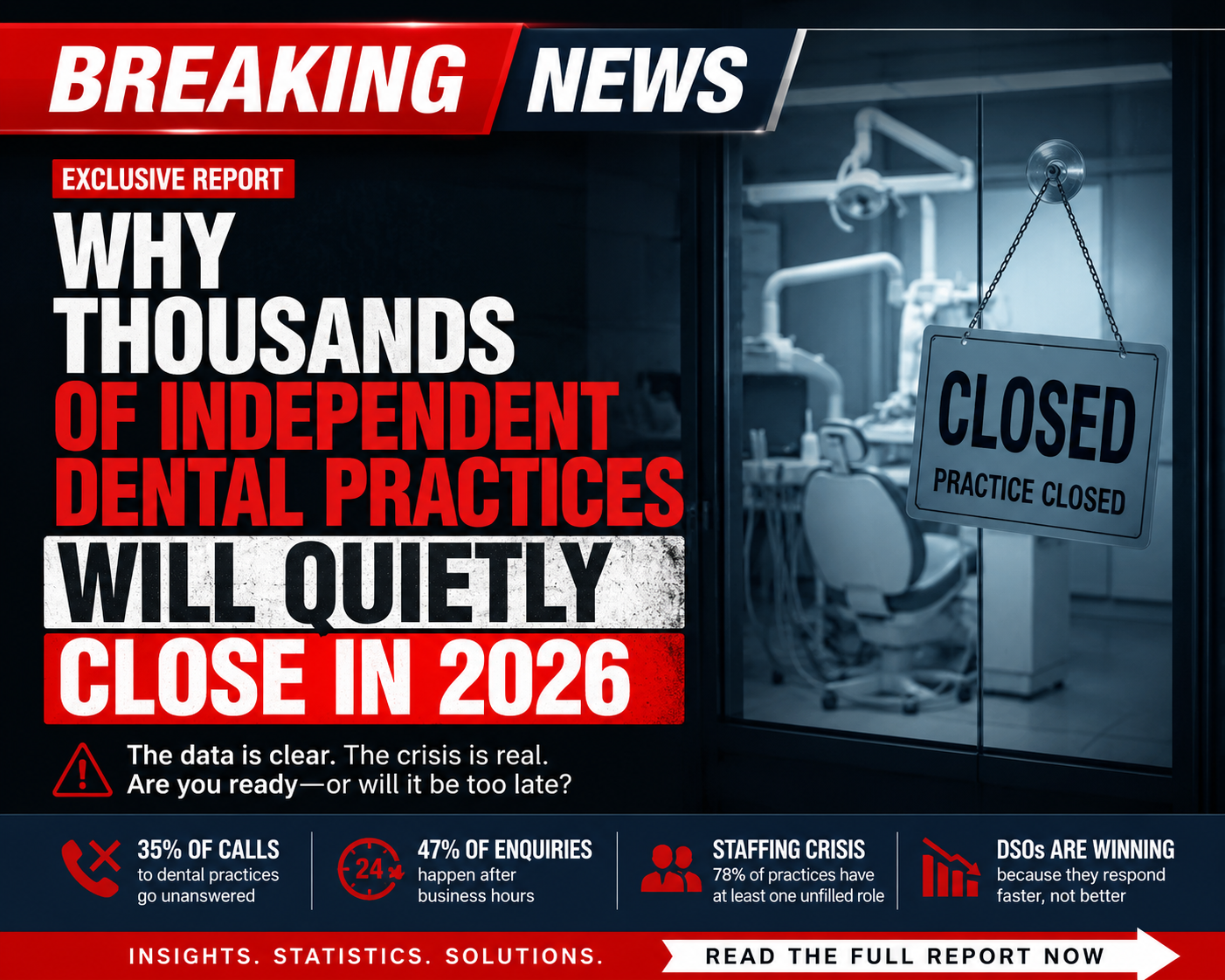
Here is the number that should stop you cold: 35% of all calls to dental practices go unanswered. During busy periods — lunch hours, peak morning slots, end of day — that rate can exceed 50%.
Imagine a mother calling at 1:15 PM for an emergency appointment for her son. The team is at lunch. The phone rings out. Only 14% of new patients leave a voicemail. The other 86%? They call the next practice on Google Maps. They don't try again. They don't come back.
"Each missed new patient call represents approximately $150 in immediate first-year revenue and up to $1,500 in lifetime patient value."
Practices that miss 20–38% of incoming calls lose between $100,000 and $150,000 annually in potential revenue. One multi-location study put the annual loss from missed calls and scheduling gaps at over $250,000 per practice. And James didn't know it was happening, because these losses never show up in a production report — they are invisible.
After hours and weekends? Independent dental practices miss 100% of inbound calls. Every single one goes unanswered. Meanwhile, 47% of appointment requests arrive outside standard business hours.
Why the DSO Down the Street is Winning
The rise of Dental Service Organisations (DSOs) is the most disruptive structural shift in dentistry in a generation. But here's what James misunderstood about why they were winning: it's not because their dentists are better. It's because their systems are faster.
A 2025 PatientPop study found that 67% of patients ranked "ease of booking" as their most important factor when choosing a new provider — above reviews, location, and even price.
DSOs have centralised call centres, 24/7 AI booking, automated follow-up, and recall systems. When that mother called at 9 PM on a Sunday, the DSO responded instantly. When a patient books and then goes silent, the DSO sends a reminder. When a patient hasn't returned in 6 weeks, the DSO sends a reactivation message. James did none of this — because he simply had no one to do it.
The Squeeze That Breaks Practices
The gap is simple and brutal: staff wages are rising, equipment costs are rising, rent is rising — and insurance reimbursement rates remain flat. Larger DSOs absorb these pressures through economies of scale. Independent practices cannot. Which means the only lever left is capturing more of the revenue you're already earning the right to.
The Math on What You're Actually Leaving Behind
Let's make this concrete. A typical solo dental practice receives 25–40 calls per day. That's roughly 200 calls per week. If 35% go unanswered:
- 70 missed calls per week
- Roughly 20% of those are new patient enquiries = 14 per week
- At 40% conversion = 5–6 new patients you never acquired
- At $1,500 lifetime value each = $7,500–$9,000 in lost lifetime revenue — every single week
The Turning Point: How James Fought Back
James realized he couldn't out-hire the problem. The staffing market was broken. He had to out-system it. The practices that will come through this period are the ones that stop treating every missed call as an isolated bad luck event and start treating it as a systems failure with a systems fix. Here is exactly what he implemented:
The moment a call goes unanswered, an automatic SMS fires back within seconds. Most people reply. Most book. The window between a missed call and a patient choosing someone else is measured in minutes.
47% of enquiries come outside business hours. If your practice goes dark at 5:30 PM, you're invisible to nearly half your potential new patients. AI-powered response systems can handle these conversations — answering questions, booking appointments, collecting deposits — without a human in the loop.
No-shows are pure revenue loss. A 48hr and 24hr reminder sequence cuts no-show rates significantly. It costs almost nothing to send. It takes zero staff time if it's automated.
You have patients who came in 8 weeks ago and haven't returned. They liked you. They just haven't heard from you. A personalised message — an offer, an update, a reason to rebook — brings most of them back. This is recurring revenue you've already earned.
This isn't the future. This is right now. If you don't implement this, the DSO down the road will gladly take the patients you've already paid to acquire.

Mazhar Rajwani
Revenue Architect & Co-founder
I build the end-to-end infrastructure that turns traffic into predictable, scalable revenue. Stop buying tactics, start building systems.
Not Theory. Not Credentials. Proof Under Real Conditions.
The Uncomfortable Truth
"You didn't lose those patients because your dentistry was inferior. You lost them because nobody picked up the phone. Or because they messaged at 8 PM and nobody replied until morning. By then, they'd already confirmed with whoever responded first."
What DSOs Have That You Don't
- ✓ 24/7 call answering with immediate booking
- ✓ Instant after-hours response via SMS & WhatsApp
- ✓ Automated 48hr and 24hr appointment reminders
- ✓ Lapsed patient re-engagement campaigns
- ✓ Lead qualification and 5-minute follow-up
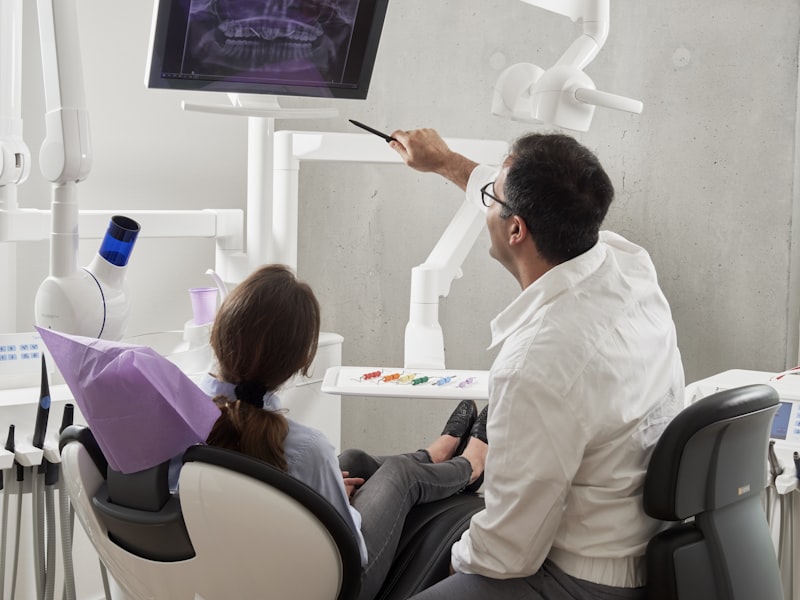
Fig 1. An empty chair doesn't just mean a quiet hour—it represents lost revenue that could have been captured.